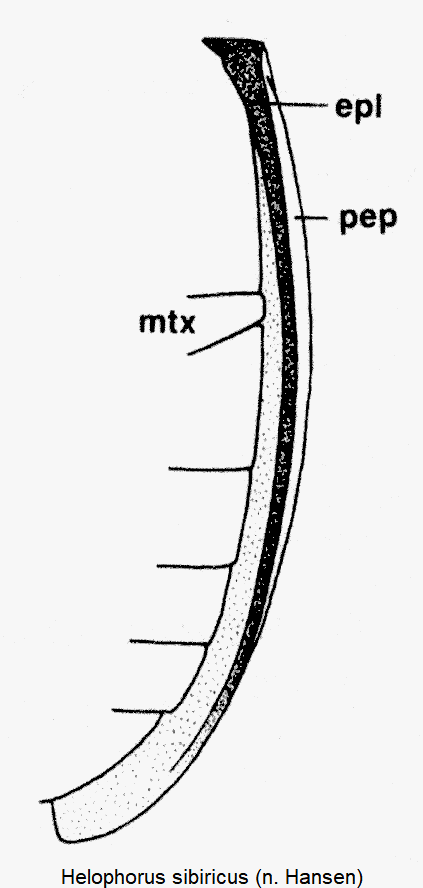
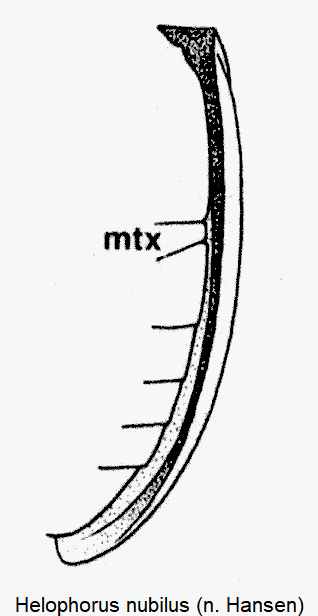
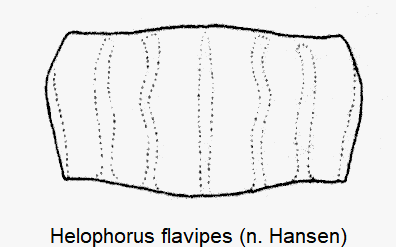
→ 4Alternate interstices of elytra markedly raised above the others. Pseudepipleura opposite metacoxae as wide as, or wider than epipleura [Abb. 2][Abb. 3].
Abb. 2Abb. 3
→ 7-Alternate interstices of elytra at most weakly raised above the others. Pseudepipleura opposite metacoxae narrower than epipleura.
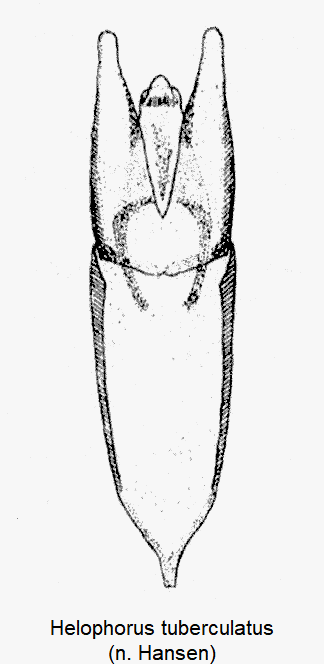
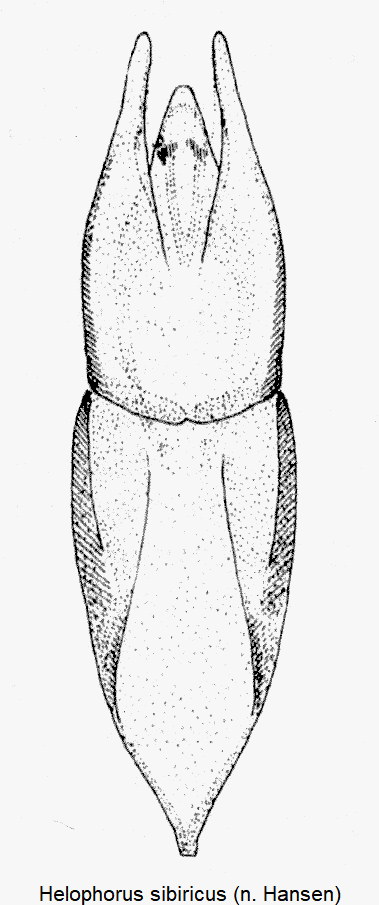
sibiricus Motschulsky🗺Terminal segment of maxillary palpi asymmetrical, with straighter inner face [Abb. 4]. Alternate interstices of elytra more moderately ridged. Pseudepipleura opposite metacoxae about as wide as epipleura [Abb. 2]. Aedoeagus [Abb. 5].
Abb. 4Abb. 2Abb. 5
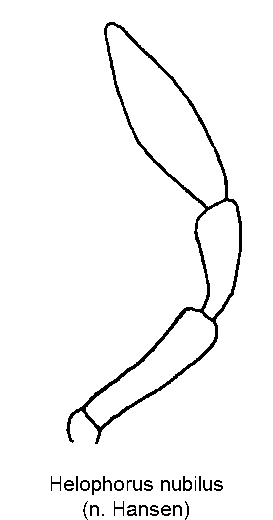
→ 5-Terminal segment of maxillary palpi symmetrical [Abb. 6]. Alternate interstices of elytra strongly ridged. Pseudepipleura opposite metacoxae about twice as wide as epipleura [Abb. 3].
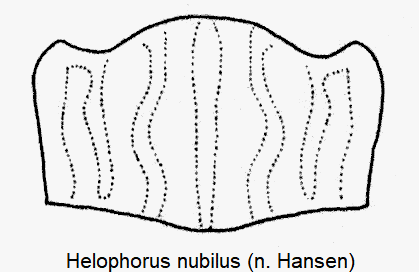
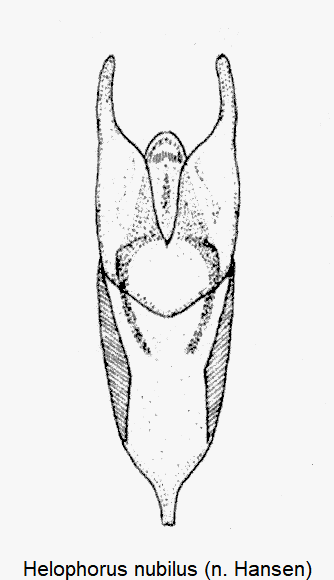
nubilus F., 1777🗺Smaller, 3.0-4.0 mm. Elytra at least 1/2 longer than wide. Internal intervals of pronotum rather weakly narrowed behind middle [Abb. 7]. Aedoeagus [Abb. 8].
Abb. 7Abb. 8
→ 6-Larger, 4.0-5.6 mm. Elytra only about 2/5 longer than wide. Internal intervals of pronotum strongly narrowed behind middle ( [Abb. 9][Abb. 10]).
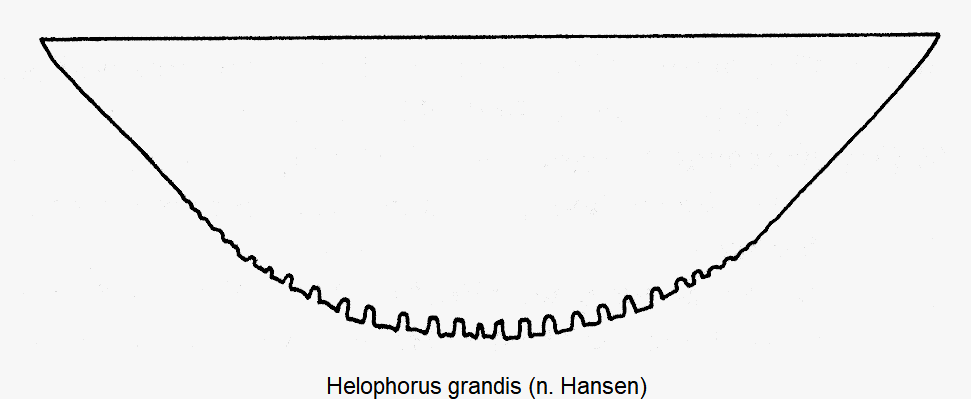
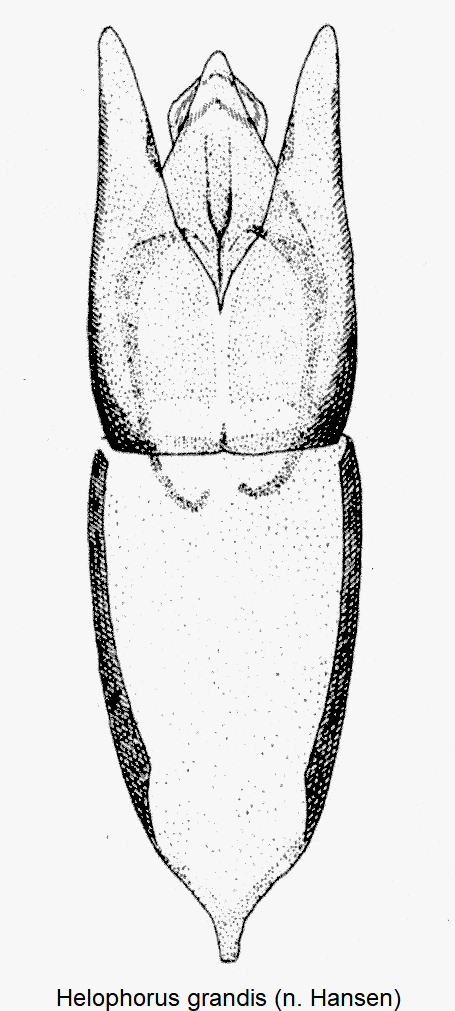
grandis Ill., 1798🗺Head and pronotum strongly and evenly granulate, the granules very distinct and strikingly well defined, show ing no trace of fusing. Posterior margin of last visible abdominal sternite fairly strongly dentate [Abb. 13]. Aedoeagus [Abb. 14].
Abb. 13Abb. 14
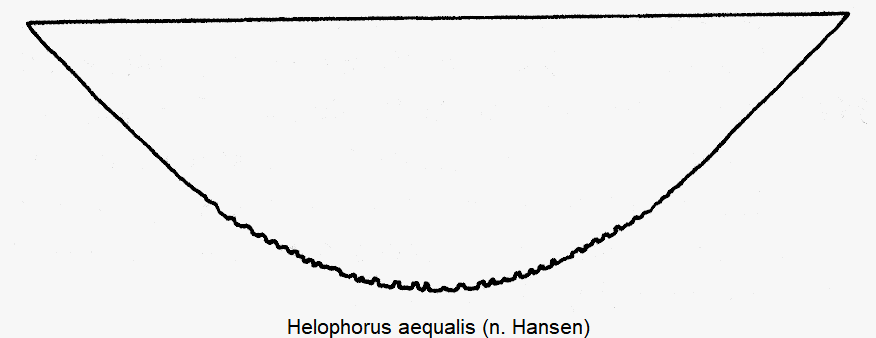
→ 8-Head and pronotum more feebly granulate, the granules to some extent fusing and indistinct, especially on internal intervals of pronotum. Posterior margin of last visible abdominal sternite with finer (or indistinct) dention [Abb. 15].
strandi Angus🗺Frontal furrow narrowly linear (or sublinear), rather deep. Elytra about 1/2 longer than wide. Sides of pronotum normally markedly sinuate posteriorly. Aedoeagus [Abb. 16].
Abb. 16
→ 9-Frontal furrow almost always expanding anteriorly. Elytra narrower, normally about 3/5 longer than wide. Sides of pronotum normally more weakly sinuate.
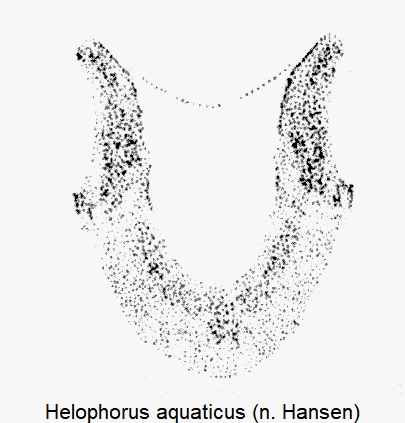
aquaticus (L., 1758)🗺Elytra dark brown, often with distinct lighter mottling. ♂: Parameres (dorsal view) making up less than half the total aedeagal length (index parameres: aedeagus = 0.42-0.47), their outer face normally distinctly rounded [Abb. 17]. ♀: 9th horseshoe-shaped tergite (retracted in abdomen) with distinct lateral projections basal to which sides are distinctly concave [Abb. 18].
Abb. 17Abb. 18
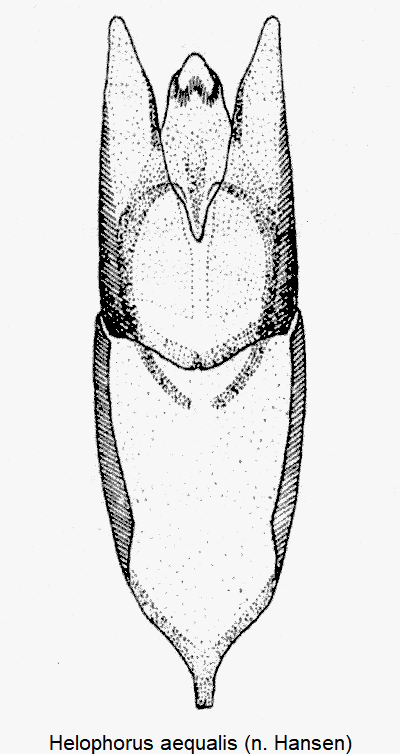
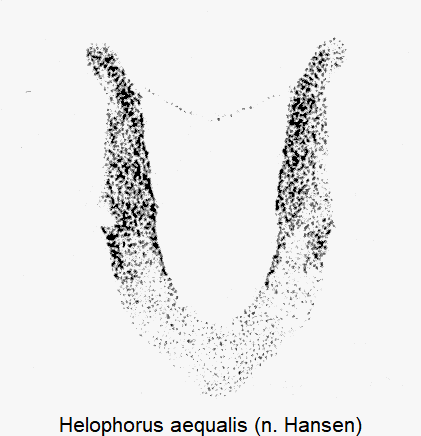
aequalis Thoms., 1868🗺-Elytra often slightly paler, usually without distinct lighter mottling. ♂: Parameres (dorsal view) making up about half of the total aedeagal length (index parameres: aedeagus = 0.47-0.51), their outer face straighter, often feebly sinuate [Abb. 19]. ♀: 9th tergite on the average a little narrower, with less distinct lateral projections, often almost straight-sided [Abb. 20].
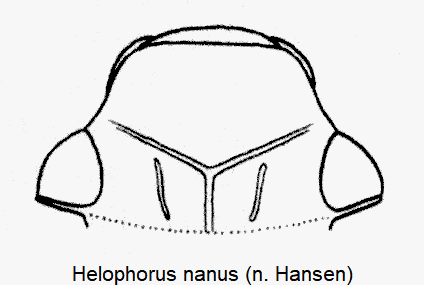
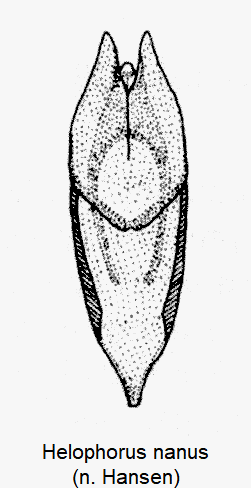
nanus Sturm, 1836🗺Pronotum [Abb. 32] smooth and shining, often almost polished, normally finely punctured (almost without granulation). Head with a distinct pair of accessory furrows running (almost) parallel to median frontal furrow, between it and eyes [Abb. 33]. Aedoeagus [Abb. 34].
Abb. 32Abb. 33Abb. 34
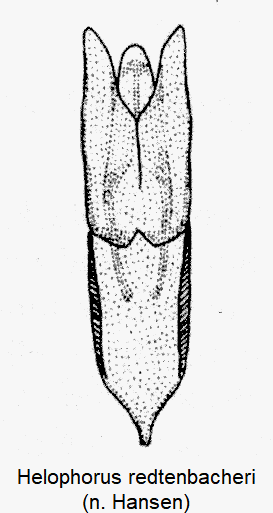
redtenbacheri Kuw., 1885🗺-Pronotum rather coarsely granulate (though granules rather low). Head without such accessory furrows. Aedoeagus [Abb. 35].
→ 17Elytra with distinct (often very conspicuous) paler spots. Pseudepipleura broadly visible from below, opposite metacoxae about equally wide as epipleura (as [Abb. 2]). Frontal furrow broadly linear [Abb. 36] or expanded anteriorly (as [Abb. 37]).
Abb. 2Abb. 36Abb. 37
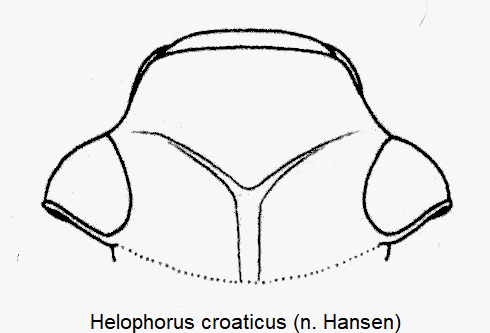
→ 18-Elytra normally without distinct (or at most vaguely defined) paler spots. If pseudepipleura are broadly visible from below, frontal furrow is narrowly linear [Abb. 38].
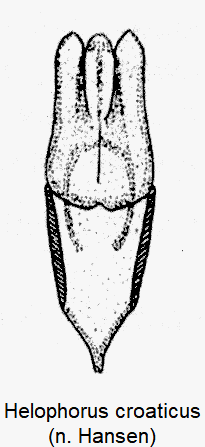
croaticus Kuw., 1886🗺Elytra about 1/2 longer than wide, very strongly striate, interstices strongly convex, in part obtusely ridged; without large conspicuous pale spot behind arrow-mark. Frontal furrow not expanded anteriorly. Aedoeagus [Abb. 39].
Abb. 39
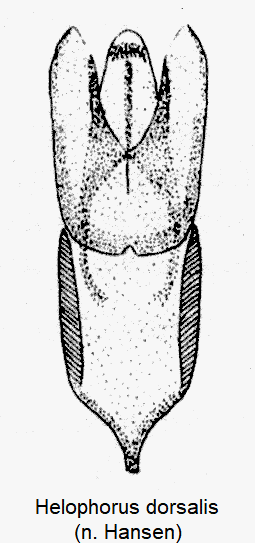
dorsalis (Marsh., 1802)🗺-Elytra 3/5 longer than wide, rather strongly striate, interstices much less convex, not ridged. Lighter mottling of elytra more extensive, normaly forming a large conspicuous pale spot on each elytron, behind arrow-mark. Frontal furrow expanded anteriorly. Aedoeagus [Abb. 40].
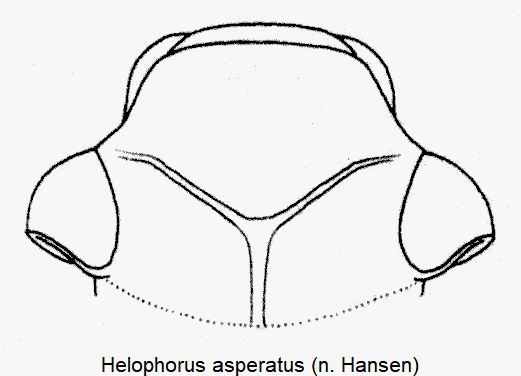
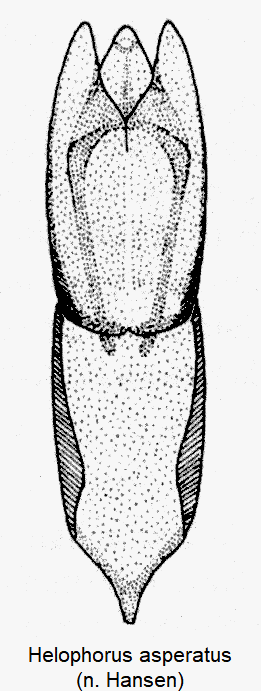
asperatus Rey, 1885🗺Head and pronotum strongly and evenly granulate, the granules very distinct and strikingly well defined, also on internal intervals of pronotum, showing no trace of fusing. Frontal furrow normally rather narrow, sublinear [Abb. 41]. Rather large, dark species, normally with a faint greenish hue on elytra; length 3.8-4.8 mm. Aedoeagus [Abb. 42].
Abb. 41Abb. 42
→ 19-Granulation on middle portion of pronotum almost always somewhat reduced, only seldom with distinct granules on internal intervals (the granules then fairly low and not strikingly well defined, except in some very rare specimens of obscurus, cf. the description of that species). Frontal furrow normally either wider and expanded anteriorly [Abb. 37] or narrowly linear [Abb. 38].
→ 20Elytra with distinct, though sometimes faint greenish, purplish or bronze hue, almost always dark. Elytra with a distinct oblique impression in anterior third.
→ 21-Elytra without any trace of metallic reflections, and without distinct impression in anterior third.
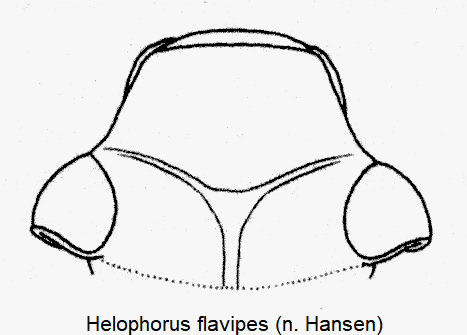
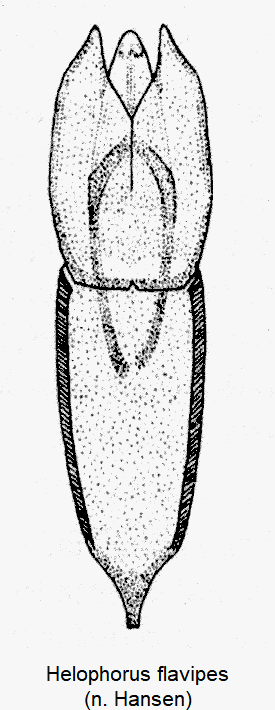
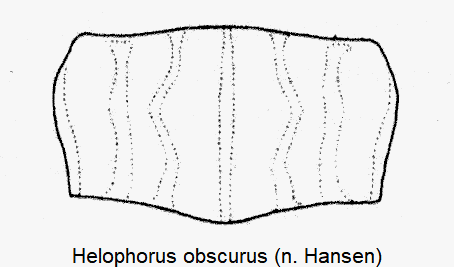
flavipes F., 1792🗺Submedian furrow of pronotum rather weakly curved outwards in middle, not distinctly angular [Abb. 43]. Elytra normally tapered at apex. ♂: Aedeagus [Abb. 44].
Abb. 43Abb. 44
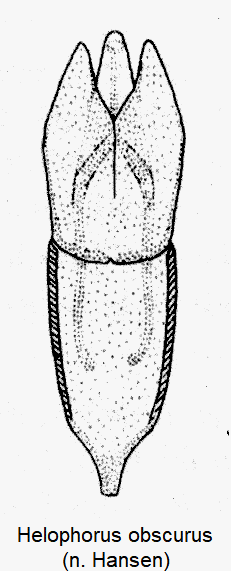
obscurus Muls., 1844🗺-Submedian furrow of pronotum normally more strongly and markedly angularly curved outwards in middle [Abb. 45]. Elytra on the average a little wider, apex usually more bluntly rounded. ♂: Aedeagus [Abb. 46].
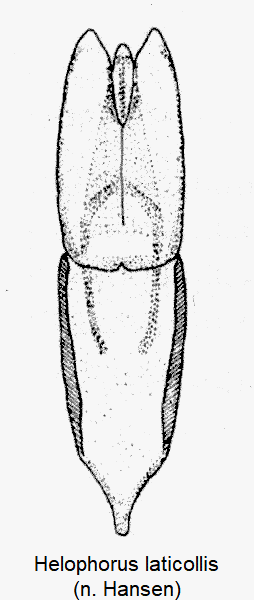
laticollis Thoms., 1853🗺Pseudepipleura narrow, not visible from below (as [Abb. 47]). Pronotum rather evenly convex, with uniform, close and distinct, but rather feeble granulation; granules normally visible also on internal intervals (though often slightly weaker). Length, 3.0-4.0 mm. Aedoeagus [Abb. 48].
Abb. 47Abb. 48
→ 23-Pseudepipleura broadly visible from below, opposite metacoxae aboùt as wide as epipleura (as [Abb. 2]). Internal intervals of pronotum more or less humpy, normally with strongly reduced granulation, or even simply punctured.
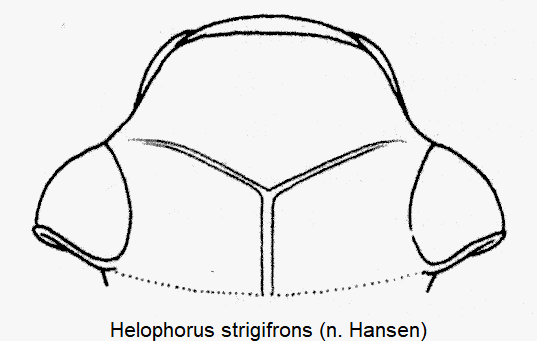
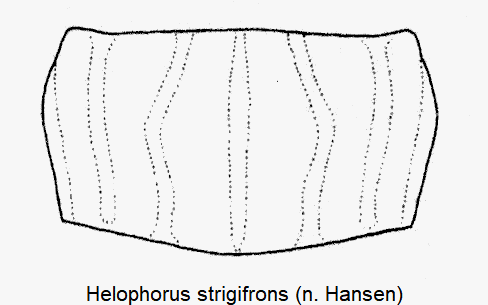
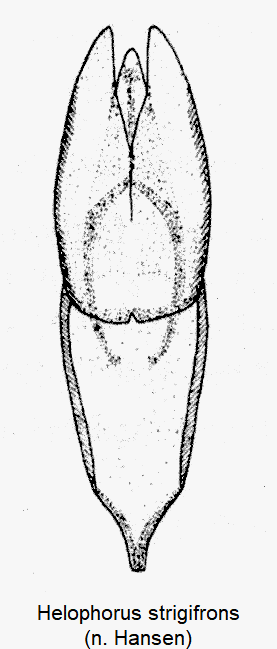
strigifrons Thoms., 1868🗺Larger, 3.5-4.2 mm. Pronotum [Abb. 49] widest just be fore middle, the sides a little straightened in posterior half; strongly convex (though longitudinally only slightly so), internal intervals usually markedly humpy. Aedoeagus [Abb. 50].
Abb. 49Abb. 50
pumilio Er., 1837🗺-Smaller, 2.5-3.2 mm. Pronotum widest just behind middie, the sides evenly rounded (almost as in [Abb. 32]); strongly arched and distinctly convex longitudinally. Aedoeagus [Abb. 51].
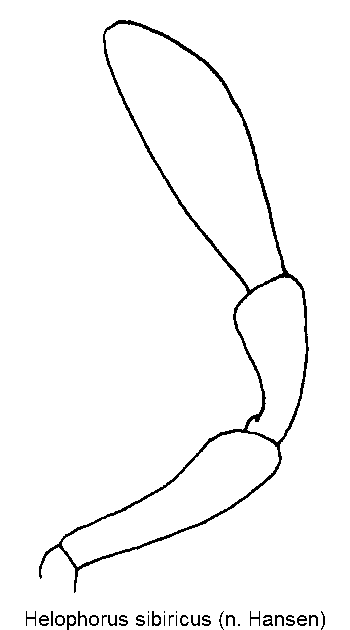
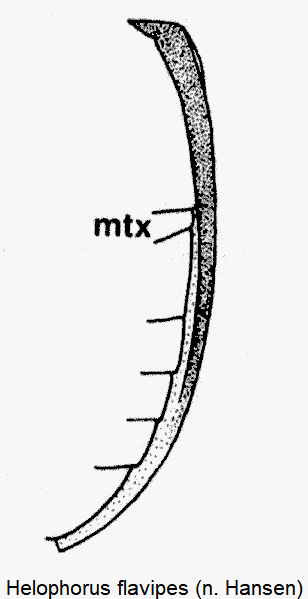
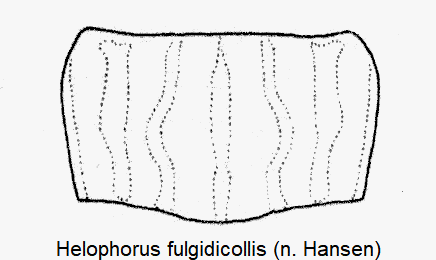
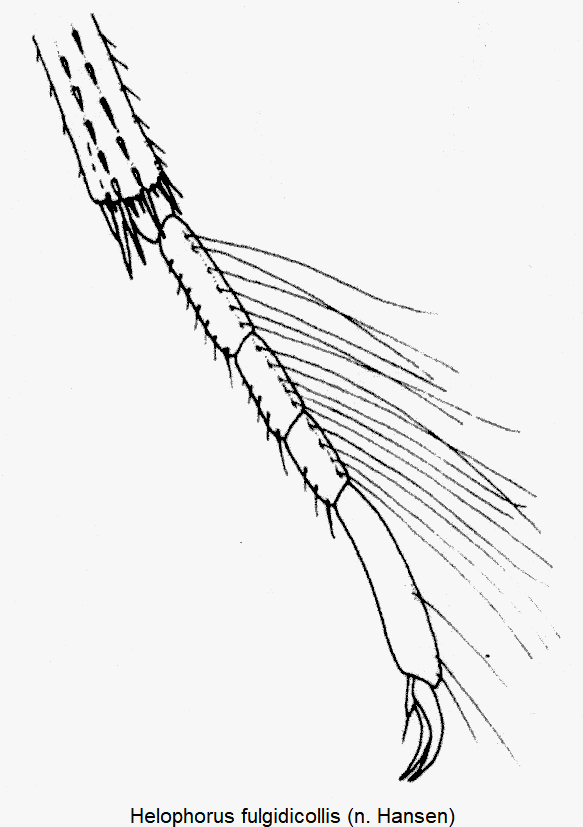
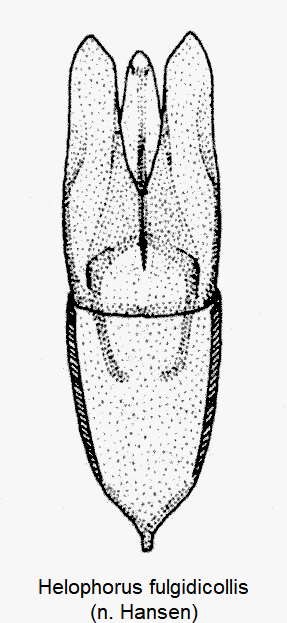
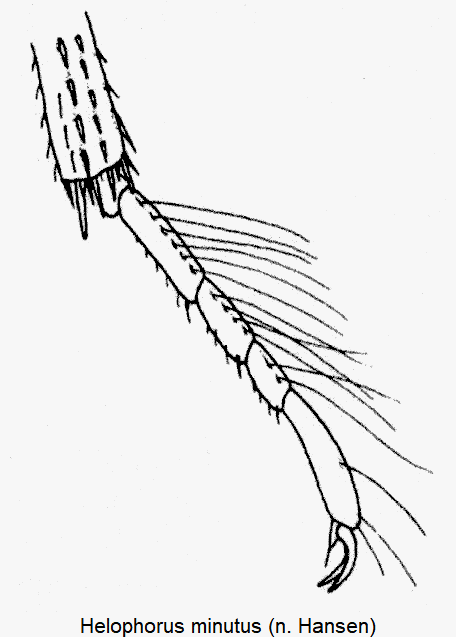
fulgidicollis Motsch., 1860🗺Elytra yellowish brown, rather strongly striate. Pronotum [Abb. 52] strongly, rather evenly granulate; granules on internal intervals rather feeble, but usually distinct. Metatarsal claw segment (excluding claws) distinctly longer than 1st + 2nd segment [Abb. 53]. Length 3.2-4.5 mm. Aedoeagus [Abb. 54].
Abb. 52Abb. 53Abb. 54
→ 25-Elytra paler, striae finer (except granularis: 2.2-2.8 mm). Pronotum usually more weakly granulate, especially on internal intervals (except granularis and some lapponicus). Metatarsal claw segment (excluding claws) not longer than 1st + 2nd segment [Abb. 55] (except lapponicus).
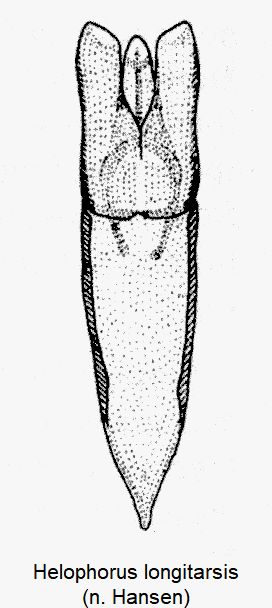
longitarsis Woll., 1864🗺Granulation of pronotum very reduced, at most visible on external intervals (and only weakly so). Pronotum very shining, bright metallic. Elytra very pale, finely striate. ♂: Aedeagus characteristic [Abb. 56].
Abb. 56
→ 26-Granulation of pronotum more distinct, also distinct on middle intervals.
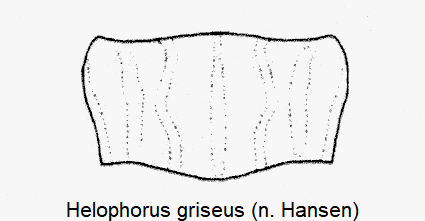
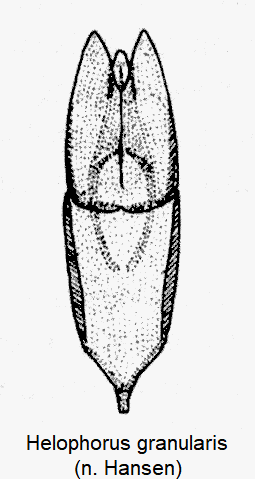
granularis (L., 1761)🗺Pronotum [Abb. 60] rather strongly convex, with rather even, close and usually coarse, though very low granulation. Marginal furrows narrow, hardly paler. Submedian furrow only rarely angled in middle. Small, 2.2-2.8 mm. ♂: Aedeagus [Abb. 61].
Abb. 60Abb. 61
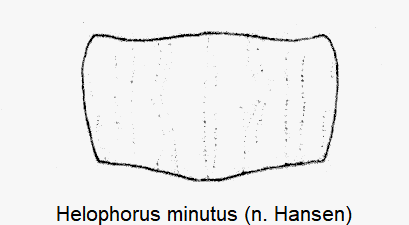
→ 29-Pronotum [Abb. 62] normally weaker convex, granulation (especially on internal intervals) weaker. Marginal furrow wider and often paler; if marginal furrow is not istinctly paler, submedian furrow is usually distinctly angled in middle. On average larger, 2.8-3.6 mm .
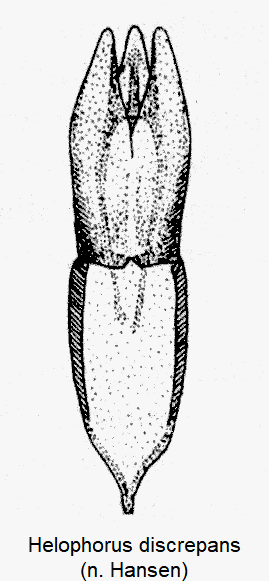
discrepans Rey🗺Pronotum a little more convex and rather strongly granulate, the margins reddish or brownish, not conspicuously paler. ♂: Aedeagus [Abb. 63].
Abb. 63
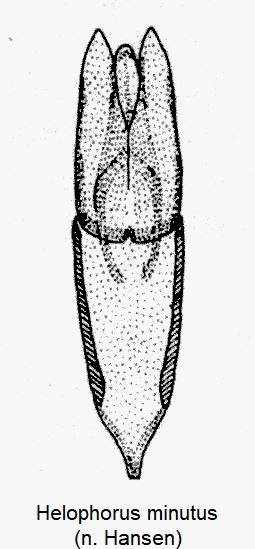
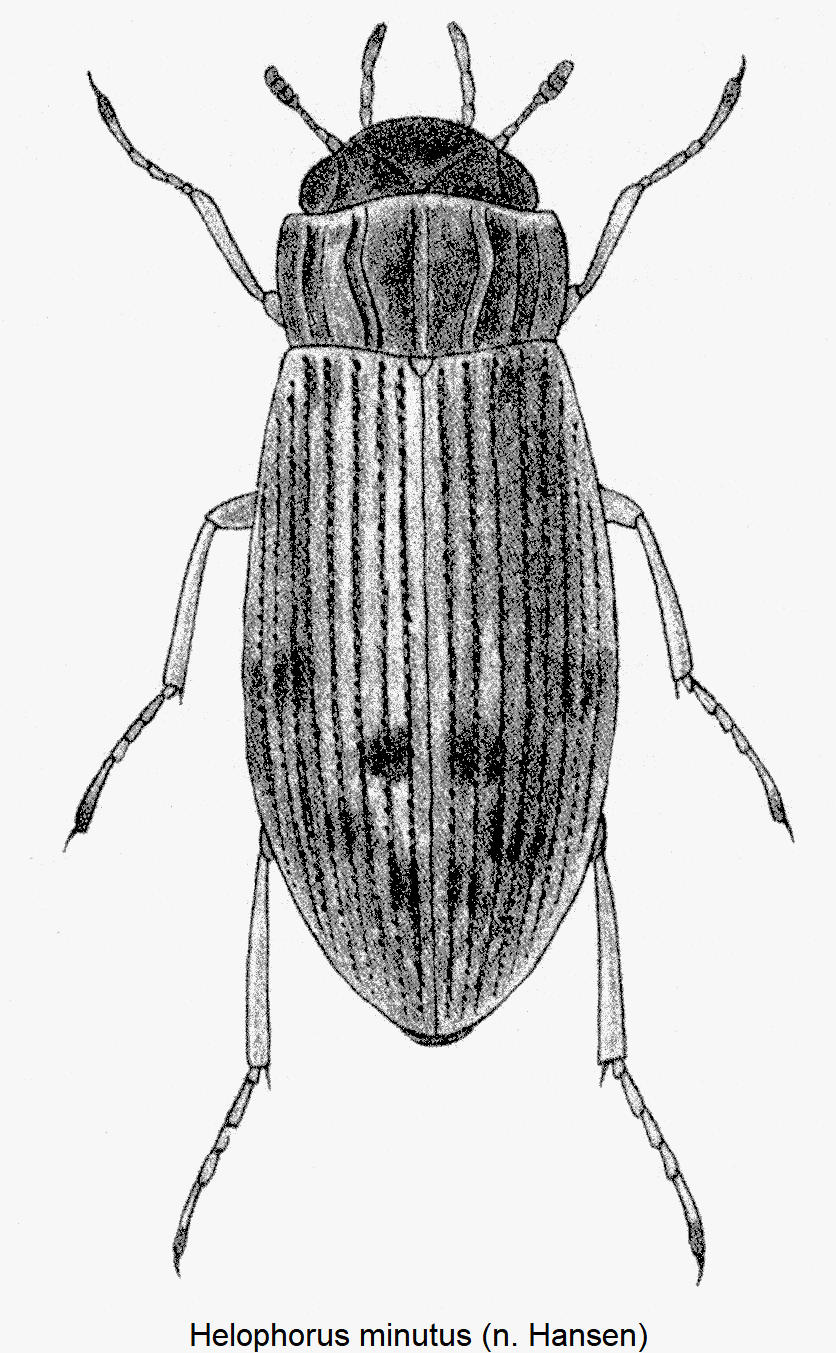
minutus F., 1775🗺-Pronotum [Abb. 62] a little less convex, normally more weakly granulate, anterior and lateral margins normally distinctly paler, usually broadly yellow. ♂: Aedeagus [Abb. 64]. Habitus [Abb. 65].
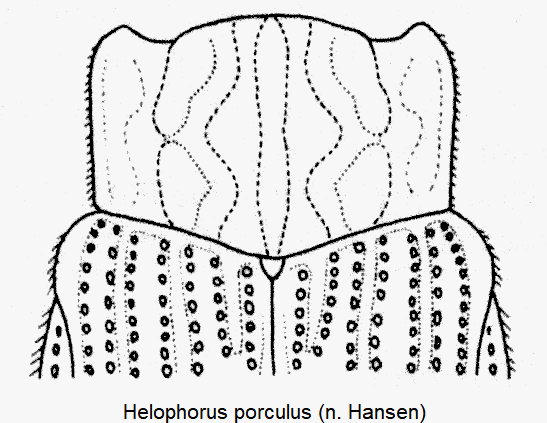
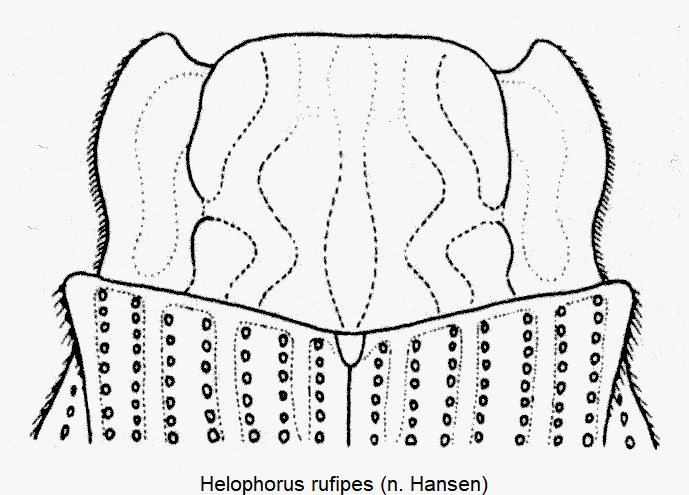
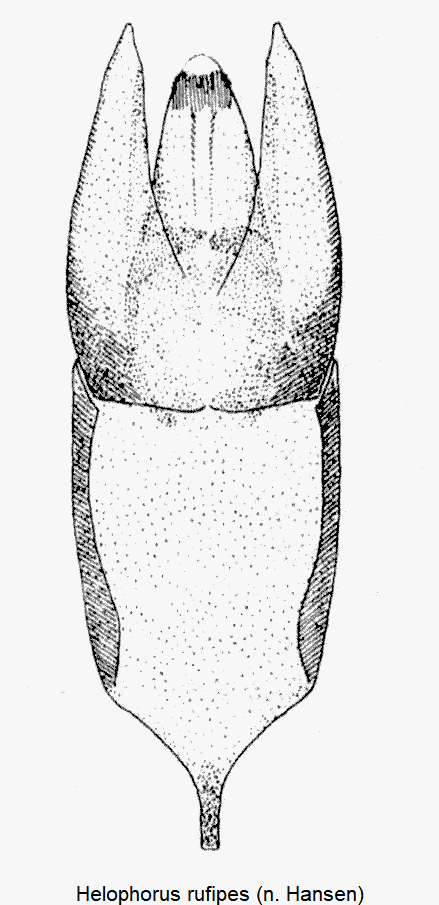
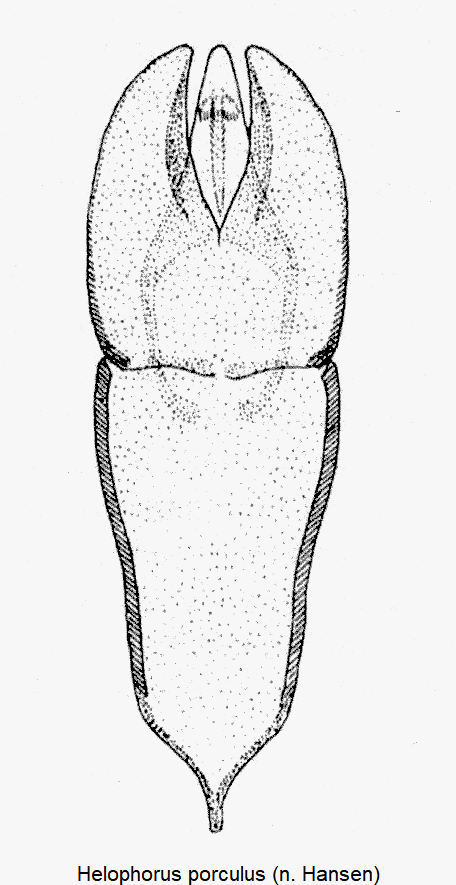
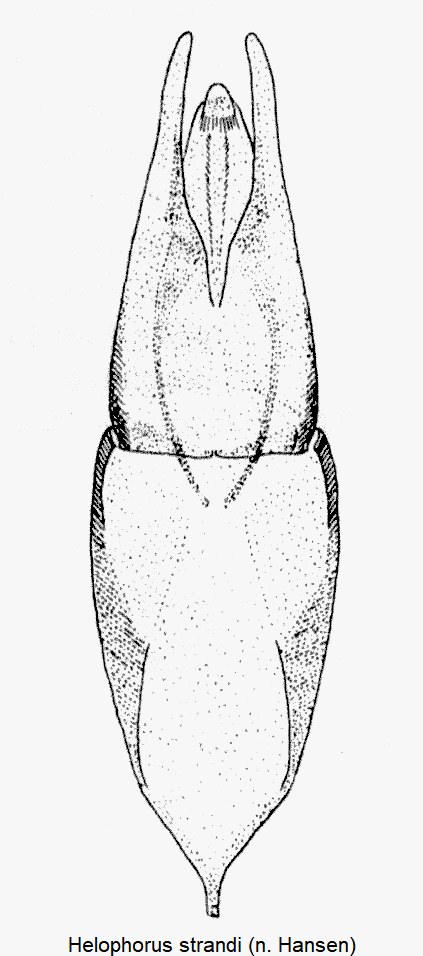
 Frontal furrow narrowly linear (or sublinear), rather deep. Elytra about 1/2 longer than wide. Sides of pronotum normally markedly sinuate posteriorly. Aedoeagus [Abb. 16].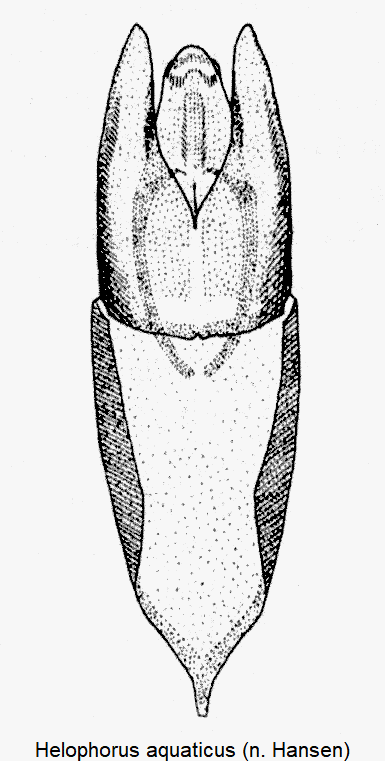
 🗺
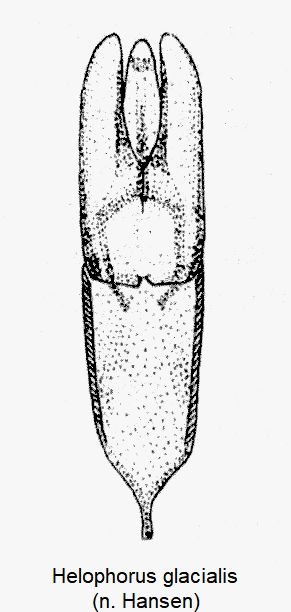
🗺
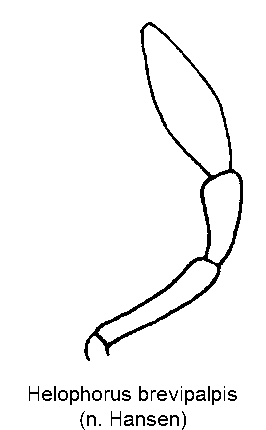
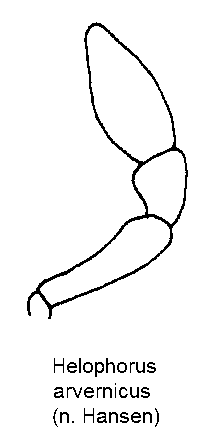
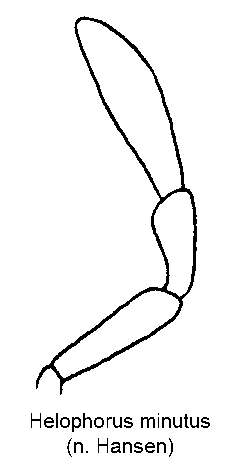



 Käfer Europas herausgegeben von Arved Lompe sind lizenziert unter den Bedingungen der Creative Commons International 4.0 Lizenz BY-SA (Namensnennung-Weitergabe unter gleichen Bedingungen)